

Pre-Commercial Thinning Analysis
Ensure optimal tending time for young stands with AI-powered insights.

Unlock optimal growth of your forest stands
Early thinning for young trees and seedlings is the first essential tending operation after planting. Doing this on time has the largest impact on tree growth, forest productivity, and long-term economic value. Arbonaut’s analysis ensures your young stand gets the space, light, and nutrients it needs to thrive.
86% accuracy of classification
Recommended for trees up to 5 meters in height
Best suited for spruce-dominated stands with competing deciduous trees (4-10 years after planting)
Based on satellite images, forest cover changes, and AI
Keep young stand thinning on schedule
Typical issues
With gaps in information
Even a single season of delay can make young stand thinning more expensive as competition increases.
Some stands become urgent sooner than others, making it difficult to decide where crews and resources should go first.
Assessment across large areas require extensive and costly fieldwork to establish where treatment is needed.
With digital technology
What thinning needs analysis can enable
Repeat the analysis annually to reflect changing conditions as young stands develop.
Direct efforts by digitally classifying thinning needs as high, moderate, or low urgency, with 86% classification accuracy.
Do 100% of pre-planning remotely to narrow down where field checks and thinning are needed.
Prioritize early thinning work


Timing is everything
Customer project: Improving efficiency of Orsa Besparingsskog’s forest management


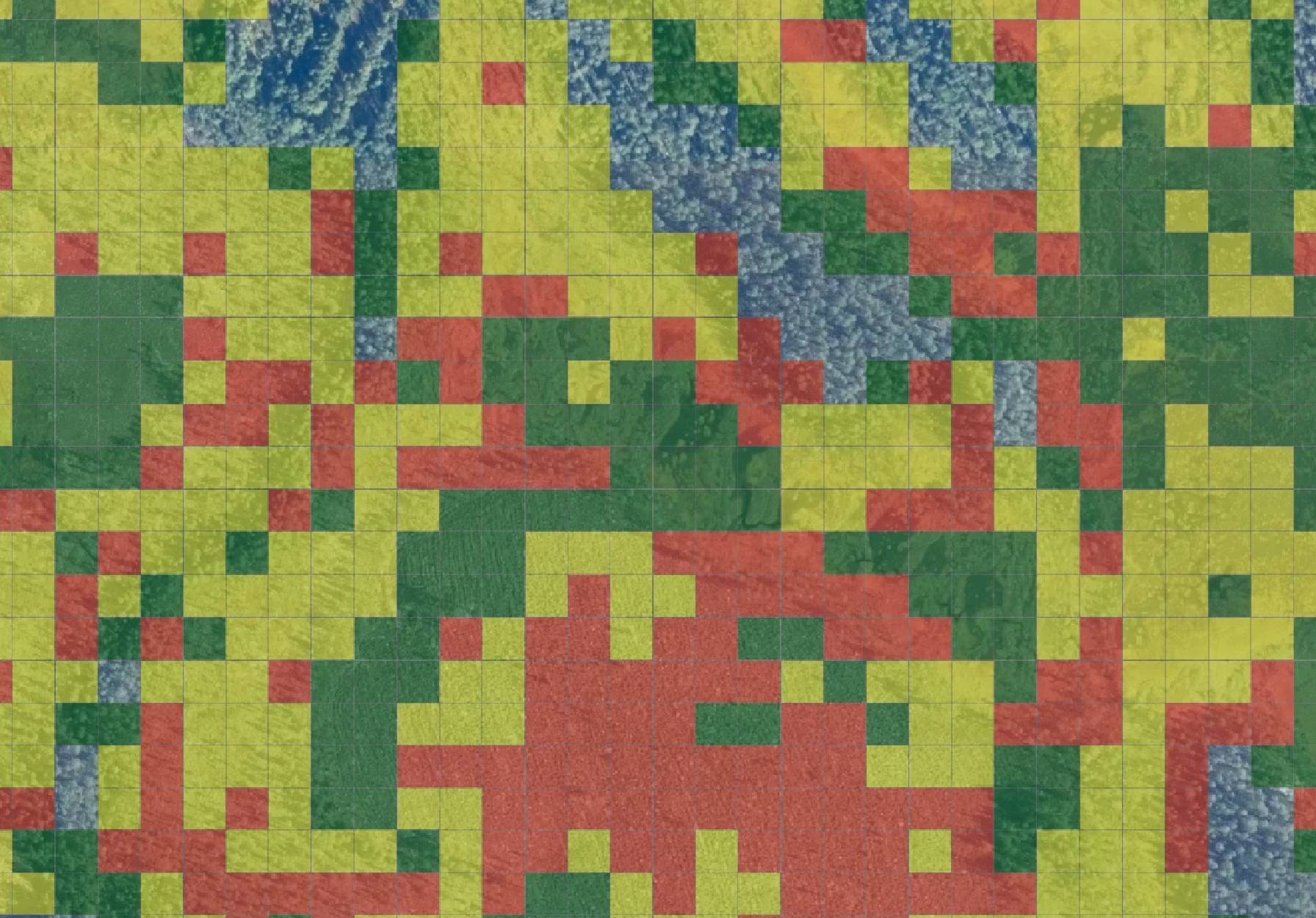
Grid‑level urgency analysis
- High urgency: Areas where deciduous competition is already impacting growth and immediate thinning is crucial
- Moderate urgency: Stands approaching the optimal thinning window. Monitoring is essential and thinning is likely required in the coming years
- Low urgency: Areas currently developing well with minimal competition. Recommended for annual monitoring to maintain growth
Don’t miss the critical window
Is your forest on track? Timing is critical for maximizing growth and minimizing future tending costs.
Frequently Asked Questions

 Cookie Policy