

Pre-Commercial Thinning Analysis
Ensure optimal tending time for young stands with AI-powered insights.

Unlock Optimal Growth of Your Forest Stands
Early thinning for young trees and seedlings is the first essential tending operation after planting. Doing this on time has the largest impact on tree growth, forest productivity, and long-term economic value. Arbonaut’s analysis ensures your young stand gets the space, light, and nutrients it needs to thrive.
86% accuracy of classification
Recommended for trees up to 5 meters in height
Best suited for spruce-dominated stands with competing deciduous trees (4-10 years after planting)
Based on satellite images, forest cover changes, and AI
Prioritize Your Early Thinning Work
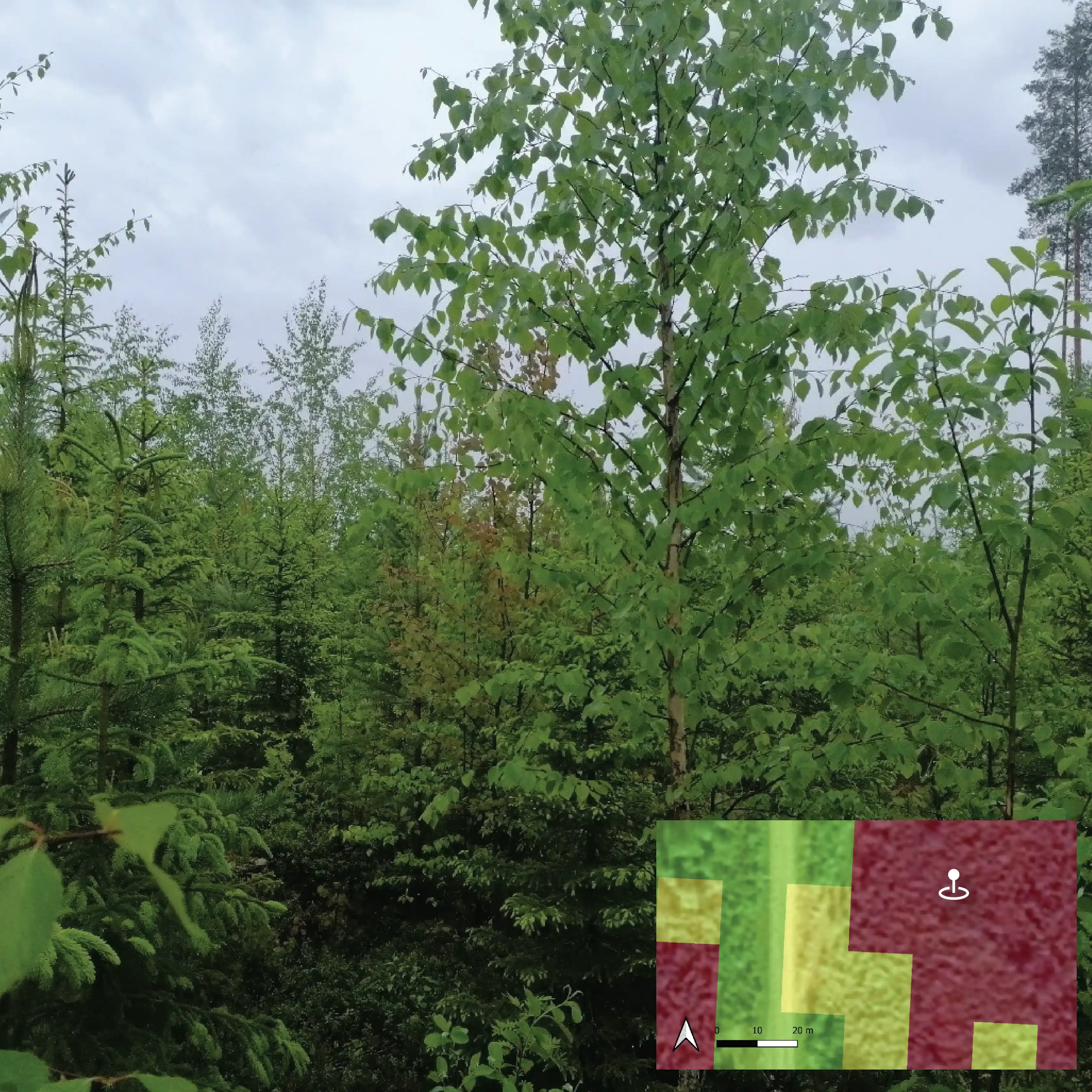
Timing is Everything
Early thinning is the most time sensitive operation in the entire forest lifecycle. Because forest conditions change year to year, our analysis is designed for annual updates, ensuring you always act within the optimal thinning window.
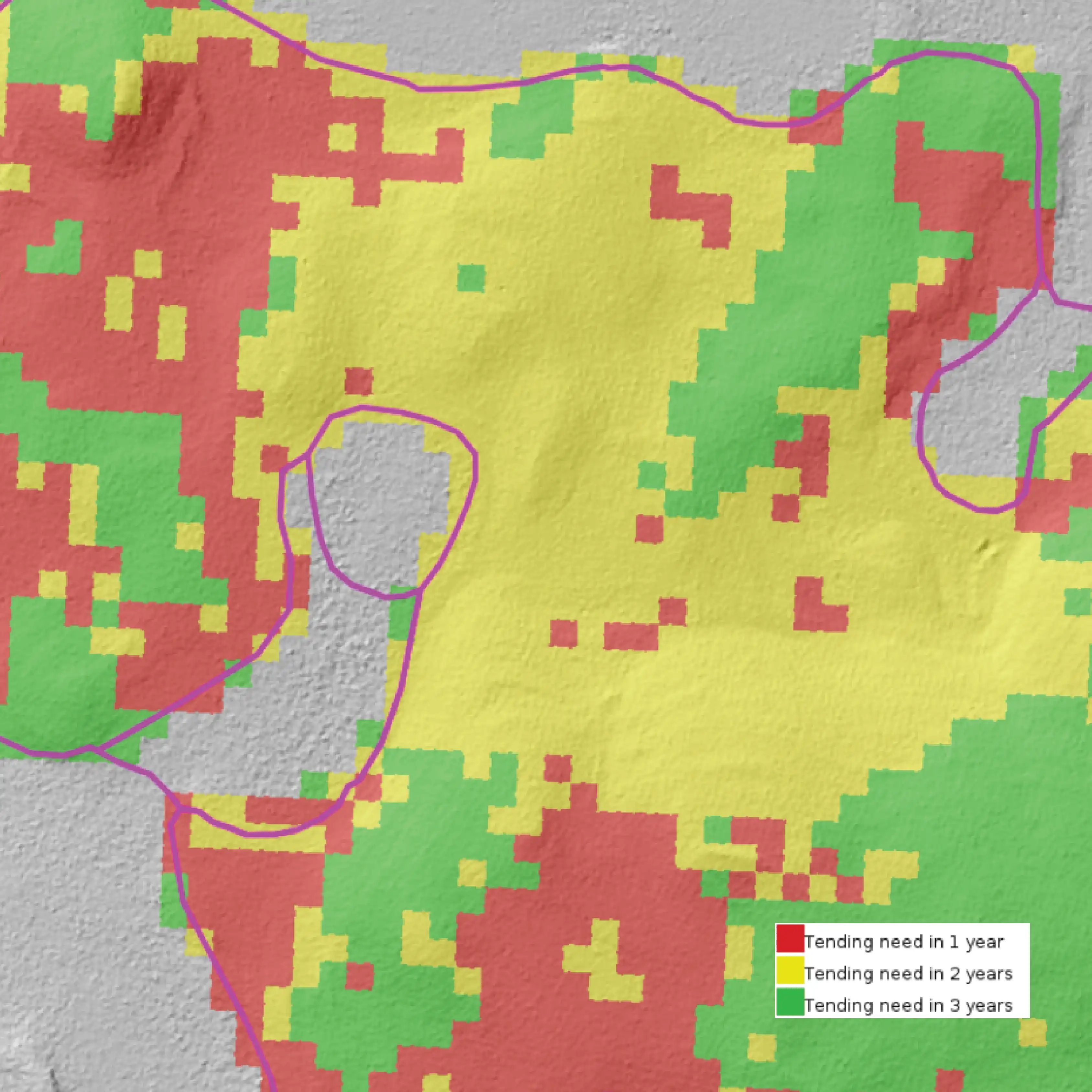
Grid‑Level Urgency Analysis
You will know exactly which areas need action.
- High urgency: Areas where deciduous competition is already impacting growth and immediate thinning is crucial
- Moderate urgency: Stands approaching the optimal thinning window. Monitoring is essential and thinning is likely required in the coming years
- Low urgency: Areas currently developing well with minimal competition. Recommended for annual monitoring to maintain growth
Don’t Miss the Critical Window
Is your forest on track? Timing is critical for maximizing growth and minimizing future tending costs.
Frequently Asked Questions
It gives you a full stand-level overview before visiting the forest, so you can plan work sequences based on urgency and allocate your field crews more efficiently.
You get a map-based view of stand conditions at a consistent 20x20m grid. Each grid cell highlights how urgently it needs attention, making it easy to plan operations.
Not entirely. Fieldwork is still needed for execution and verification. Remote sensing simply removes the guesswork and minimizes time spent searching for high priority areas. Planning can be done remotely 100%.
The approach scales to thousands of hectares because it uses satellite data. It is suitable for both small forest owners and large organizations.
Annual analysis is highly recommended because forest conditions change quickly from season to season. A yearly update ensures you always catch the optimal thinning window and avoid costly delays.

 Cookie Policy