


Climate Innovation Challenge: Building Food Security through Agro-Met Innovative Advisory Services (AMIAS)
Background
The Climate Innovation Challenge (CIC) is a sub‑component of the CARE for South Asia program funded by the World Bank’s PARCC Multi‑Donor Trust Fund. The CIC awarded Arbonaut a project to develop an integrated digital solution that strengthens climate resilience in Sarlahi and Mahottari, two highly climate‑vulnerable districts in Nepal.
Administered by Asian Disaster Preparedness Center (ADPC), the initiative tackles two major challenges:
- Limited access to environmental and climate data
- Low climate awareness at the community level
Challenge
Climate, weather, and environmental information in the target districts was either missing, scattered, or difficult to use. Local governments could not fully incorporate it into planning, and farmers had almost no direct access to it
The relevance of timely communication of such information was once again realized in October, one of the most important months in Nepal’s agricultural calendar, when unseasonal heavy rainfall followed by massive flooding damaged the harvested paddy in agriculture farm.
The project addressed this by consolidating climate, weather, and locally collected in-situ data into a single digital platform.
Solution
Arbonaut and a local partner Clean Energy Nepal teamed up to develop and pilot a GIS web-based platform and its mobile application for local farmers in Nepal. The optimal solution was to integrate web and mobile ProMS app with near-real-time climate models.
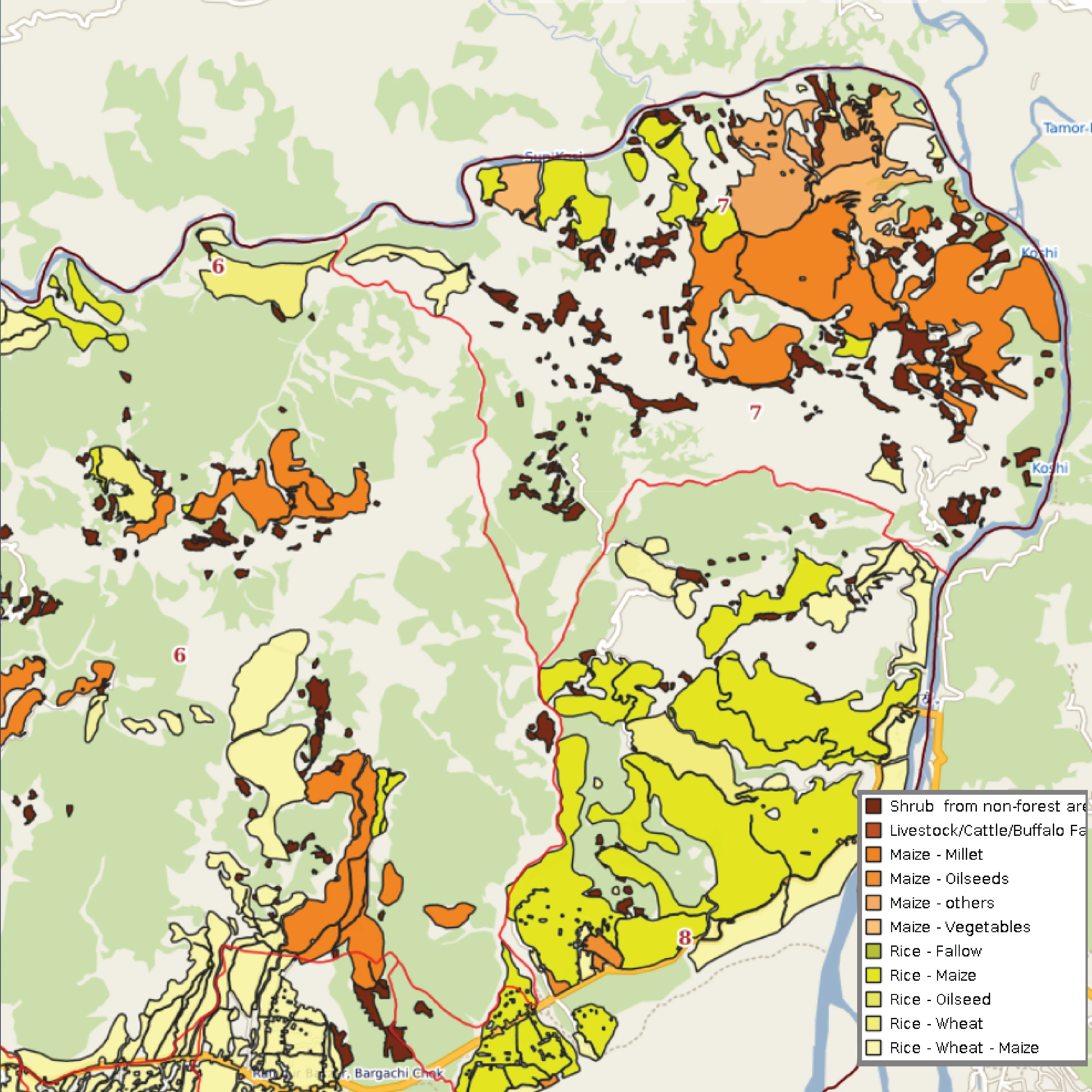
Crop types
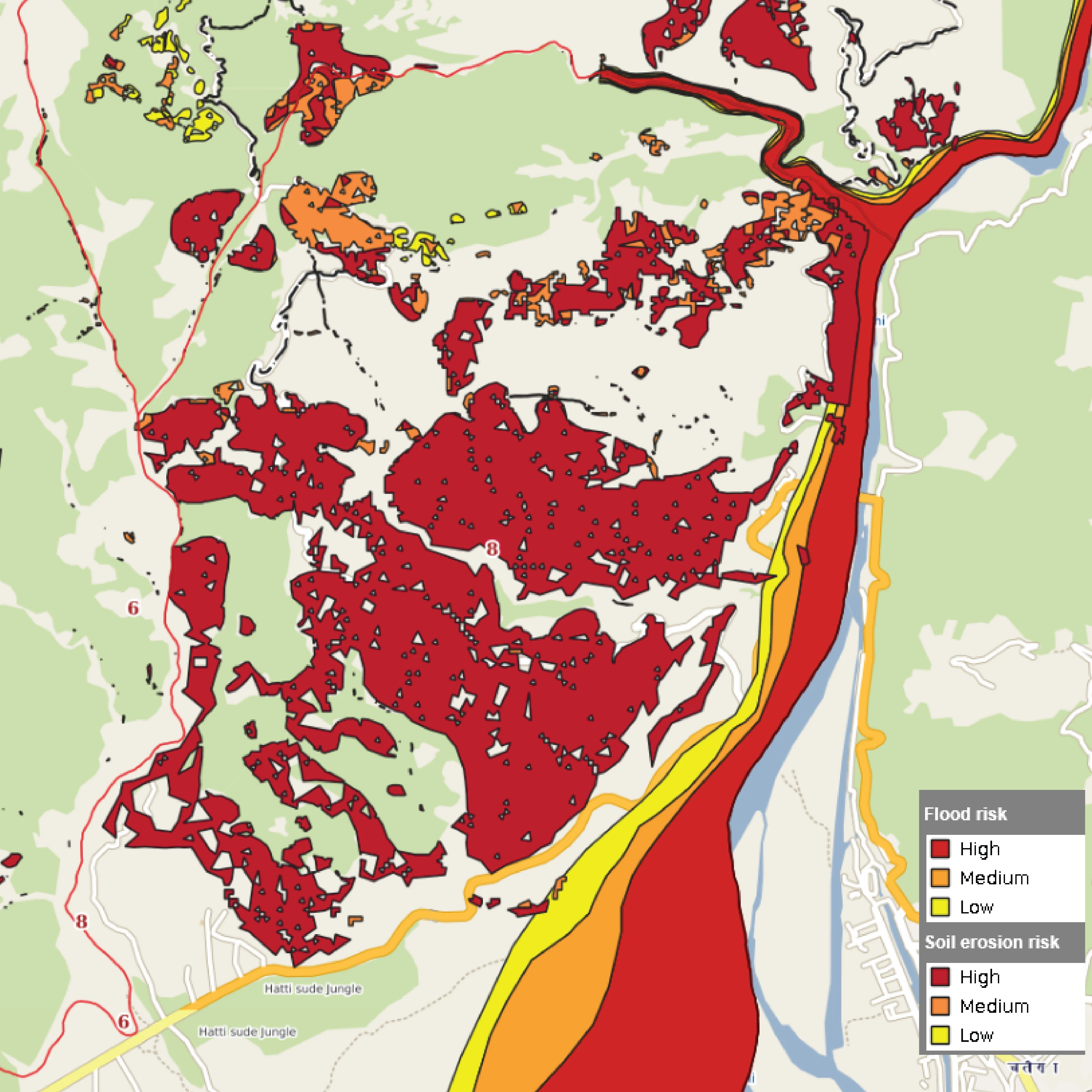
Risk of flood and soil erosion
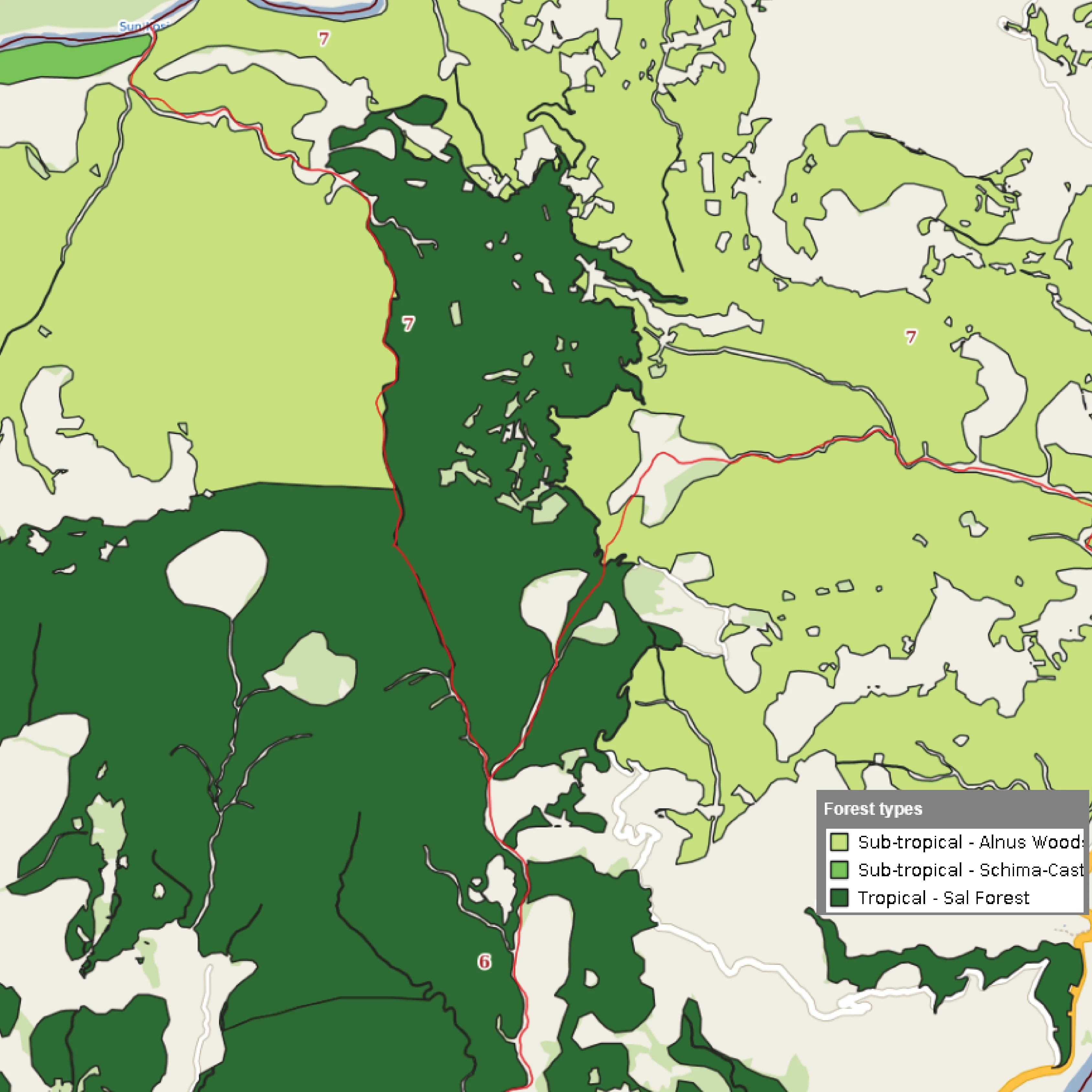
Forest types
The stakeholders gained access to the data that supports:
- Climate-sensitive planning by local authorities
- Timely agricultural decisions for farmers
- Improved food security through clearer, more usable climate information
Outcomes
Our experts presented capacity building workshops to the core team (Nepalese Youth for Climate Action, local youth, National Farmers Group Federation, and Municipality authorities) and interactive hands-on training to local lead farmers on the use of the platform and mobile app.
For the effective use of data, the project delivered a broad awareness campaign with simplified climate information in local languages and FM radio broadcasts to reach rural audiences.
Together, these outputs ensure that local institutions and communities are equipped with practical tools and knowledge to respond proactively to climate risks and strengthen resilience for the future.

 Cookie Policy