


More Precise Forest Planning through Micro-Stand Segmentation
As a forestry company managing approximately 36,000 hectares of productive forest in Sweden, Boxholms Skogar needed stand data that could keep pace with increasingly complex forest planning. Many stands contain several management factors within the same boundary: productive forest, biodiversity values, moisture variation, and operational constraints.
When these differences are hidden inside one stand unit, planning becomes slower and less precise. Planners need to interpret the variation manually, adjust boundaries, and decide where logging, silviculture, conservation, or long-term growth planning should take priority.
Challenge
Boxholms Skogar needed a more accurate way to divide stands into meaningful planning units, not only to describe the forest better, but to support better decisions at scale.
The challenge was not the absence of data; rather, the existing stand register lacked the level of detail needed to reflect the actual forest variation on the ground.
A single stand could include both production forests and areas with high biodiversity value, even though these areas require different management decisions. Other factors, such as moisture conditions, impediments, vegetation structure, and harvestability, could also vary within the same stand.
For operational planning, this created an avoidable complexity. Stand boundaries did not always match how the forest should be managed.
Solution
Arbonaut and Boxholms Skogar carried out a collaborative pilot covering approximately 4,000 hectares.
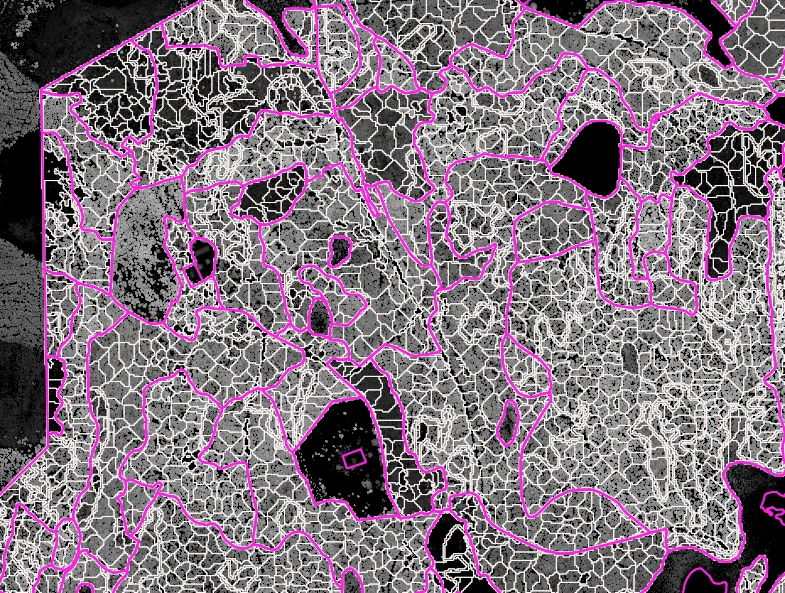
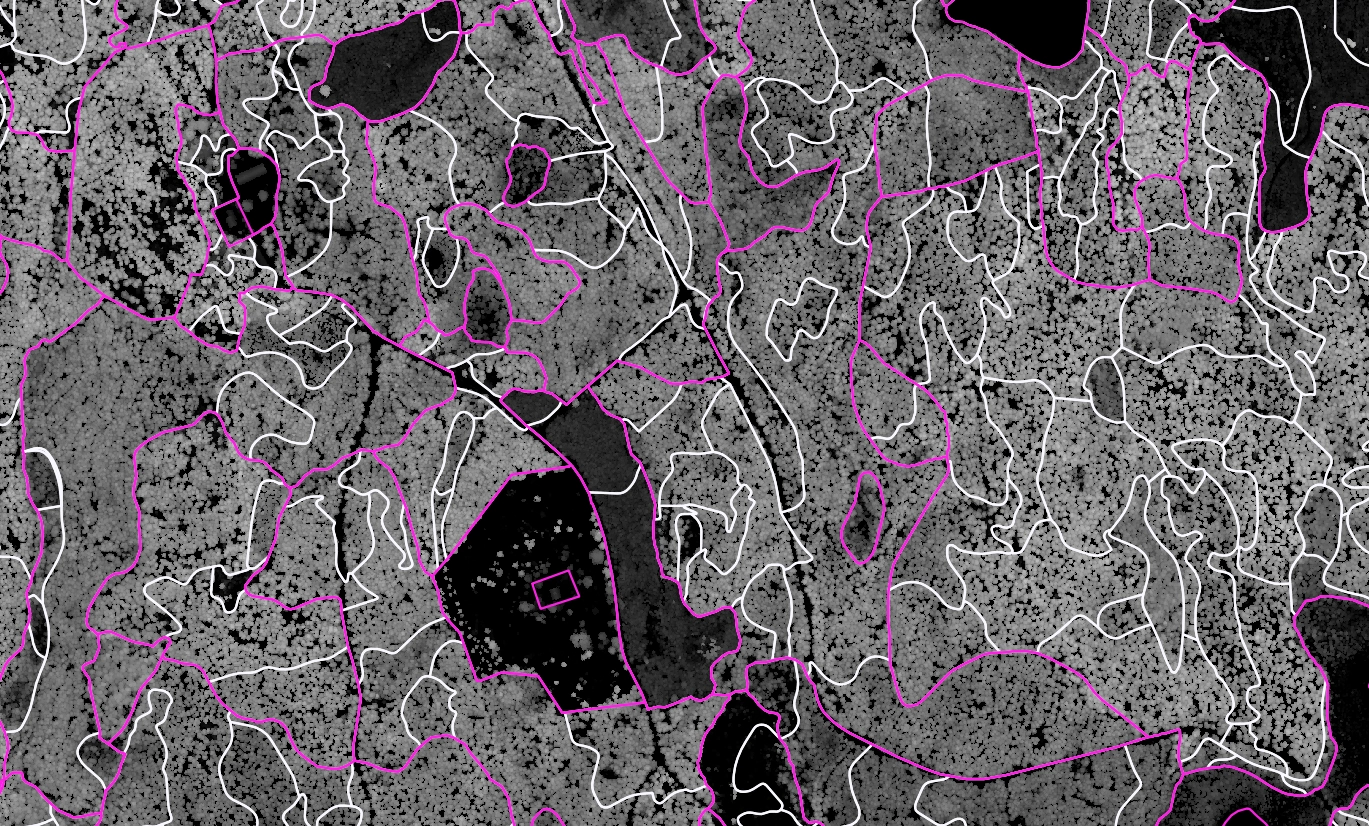
Using automated geospatial analysis, Arbonaut divided existing stands into smaller, more homogeneous micro-stands. The segmentation combined several forest and terrain layers to achieve:
- Moisture-classified segmentation to enable stands delineated by seasonal harvestability
- Vegetation-based segmentation within moisture classified stands
- Identification of forested lands on impediments and vice versa
- Identification of afforested agricultural lands
- Identification of expected biodiversity values
"Soil conditions are very important when planning forest operations and will be increasingly important in the future due to climate change. Despite that, many of today’s stand registers are primarily based on the tree layer. We have searched for remote sensing-based methods to address this issue. Constructive and open discussions with Arbonaut have resulted in a sequential method, starting with “harvestability” segmentation, followed by tree layer segmentation and further analysis. The result will give us good prerequisites for increased cost-efficiency and higher quality in forestry operations." — Peter Wallin, Head of Forest Management at Boxholms Skogar
The result was more practical planning layers for Boxholms Skogar: one that separates different management needs instead of forcing them into the same stand boundary.
Impact
The pilot showed how micro-stand segmentation can turn a broad stand register into a more precise operational planning tool.
With stand boundaries that better reflect actual forest conditions, Boxholms Skogar can:
- Carry out high-quality operational planning with less time required
- Streamline identification of biodiversity values
- Improve input data and thereby the result of strategical and tactical planning
- Create high-resolution connectivity analyses regarding forest-related features
After performing a sensitivity analysis of the methodology based on various thresholds, we expect to have a scalable foundation for improving stand data across the full 36,000-hectare forest estate.
About Boxholms Skogar
Boxholms Skogar operates in the southwest of Östergötland, Sweden, where it owns and manages approximately 36,000 hectares of productive forest. The forest has been central to operations since Boxholms AB was founded in 1872. With over 150 years of experience, Boxholms Skogar combines tradition with modern knowledge to conduct sustainable forestry that benefits both nature and society.


 Cookie Policy