


Restoring Peatlands in Finland: Balancing Ecological and Economic Factors

In a recent year, restoration has gained significant attention and it has become one of the most common topics in discussion related to forests in Finland. Driven by biodiversity objectives, water protection needs, and the EU Nature Restoration Regulation, many drained peatlands are being evaluated for restoration.
Peatland restoration is often discussed from an environmental perspective, but it is equally an economic decision not only for the Finnish forest owners, the industry, and national economy.
There certainly is a need for a holistic approach.
The Question of Nature and Economy
Finland’s forest industry, forest owners, and national economy have indeed benefitted from effectively drained peatlands in many areas as it increased forest growth and productivity.
At the same time, not every drained site is now a productive forest. Negative effects on water quality, potential biodiversity loss, and carbon dioxide in the atmosphere are imminent.
While the restoration of drained peatlands with low productivity would not significantly benefit wood supply, in other areas, high forestry value might overlap with areas of high biodiversity potential. Deciding whether to restore these areas, continue active management, or pursue a middle-ground approach requires balancing biodiversity, water quality, climate impacts, and economic considerations.
The key consideration is where restoration creates the greatest net benefit while taking into account economic goals.
Why Peatland Restoration Matters
According to Annamari Laurén, Professor in Peatland Forestry at the University of Helsinki, Finland does not lack peatlands. Of the country’s approximately ten million hectares of peatlands, about half remain undrained.
Roughly four million hectares of drained peatlands have developed into peatland forests with considerable wood productivity potential. For example, herb-rich peatland forests are among the most productive forest site types in Finland and, despite drainage, remain relatively rich in biodiversity.
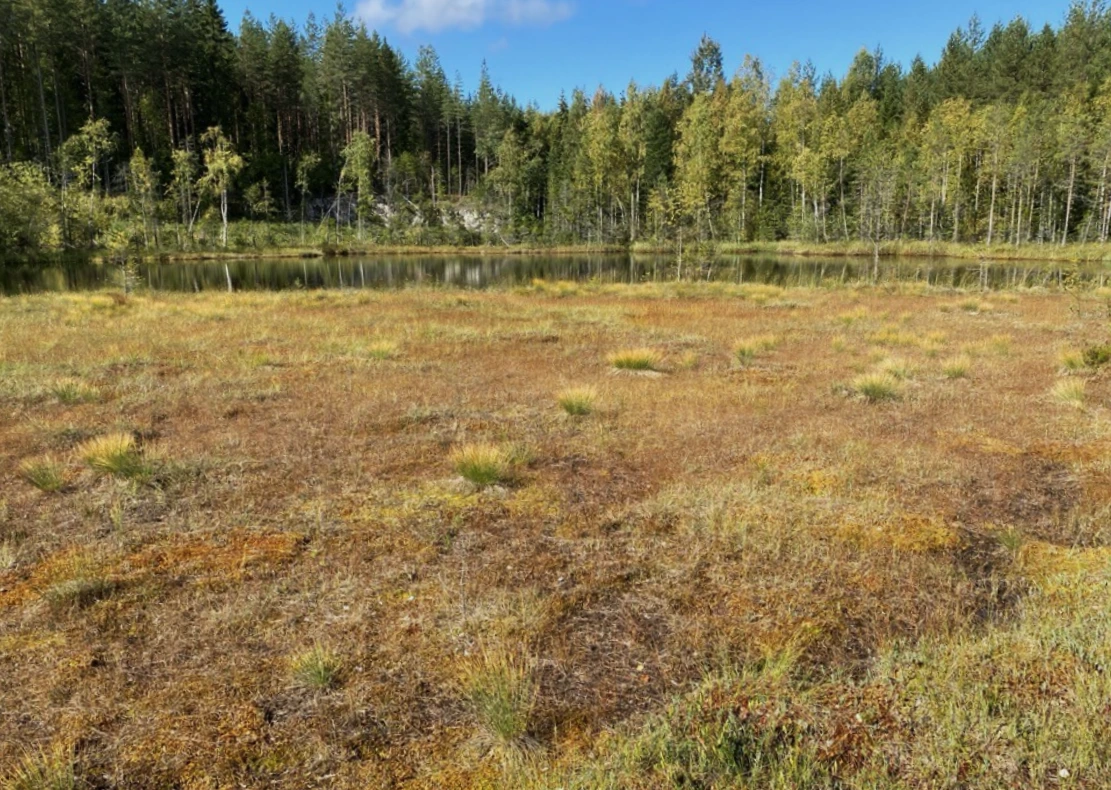
However, not all drained peatlands have developed into productive peatland forests, and many areas have modest potential for wood production. Peatland restoration becomes relevant when:
- Forest growth remains consistently low
- Water quality impacts affect downstream waters
- The long-term forest income remains modest due to costs of drainage management, fertilization, and low wood growth
In these cases, ceasing the attempts for commercial forestry in that location and restoring natural hydrology could be beneficial. It might even support the growth of nearby commercial forests during dry summers.
Water Quality Trade-Offs
One of the most important aspects of peatland restoration is that its benefits extend far beyond the restored area itself.
Water that moves through drained peatlands can carry suspended solids, organic materials, nutrients, water with low pH, and, in some cases, metals into downstream water bodies. Over time, these impacts accumulate.
Restored peatlands can help slow the water movement, retain sediments, and reduce some forms of nutrient transport before they reach downstream ecosystems. Yet, according to Laurén, restoration should not be viewed as a universal solution for every water quality issue.
"Restoration can reduce suspended solids and nitrogen loading in water bodies. However, it is unlikely to lower phosphorus or water brownification of organic carbon levels, and in some iron-rich areas, phosphorus levels may even increase. Careful water management is key."
As hydrology plays a central role, in Finland general forest guidelines recommend maintaining water table levels somewhere 30-40 centimeters below the surface.
Laurén suggests a slightly higher water table level:
"An optimal water table of approximately 25–30 centimeters below the soil surface in late summer can prevent unnecessary peat decomposition."
In an environmental perspective, this view has support from international research, where every 10 cm increase in the water table levels will decrease carbon-dioxide annually by 3 tons per hectare, until water level is 30 cm from the surface (Evans et al., 2021).
Biodiversity Benefits Depend on the Site
Restoration is often associated with biodiversity gains. It gradually recreates conditions that support species adapted to peatlands.
Yet, restoration does not automatically create high biodiversity everywhere. Existing habitat quality, nutrient levels, surrounding land use, and the condition of the ecosystem before restoration all influence the results.
According to Laurén, the impact of increased biodiversity may seem most positive in some locations partly due to the restored area becoming difficult to access, thereby reducing human activity in the area.
"If the goal of restoration is to increase biodiversity, the benefits for nutrient-poor peatlands may be minimal, as their species composition is already less diverse than that of more fertile peatlands. There still are plenty of undrained nutrient-poor peatlands."
This highlights an important principle: restoration projects are often most successful when ecological objectives are defined at the outset, and potential sites are selected accordingly.
Balancing Restoration, Forestry, and Carbon
For landowners, restoration often comes down to evaluating long-term returns. Some drained peatlands require repeated ditch maintenance, while generating limited timber growth. In such cases, the costs of maintaining forestry production can continue to increase without producing comparable economic benefits.
According to Laurén, many peatland forests can remain in productive forestry use while reducing environmental impacts through improved water management.
"Carbon balance assessments should consider the entire lifecycle of harvested wood."
Keeping productive peatland forests growing can help maintain carbon sequestration while reducing peat decomposition through better water management.
However, when drainage maintenance continues to generate costs and forest growth remains poor, restoration may provide a more sustainable long-term option. In these situations, landowners can improve ecosystem conditions and potentially access environmental compensation schemes or restoration funding.
Laurén emphasizes that fertile, herb-rich forested peatlands in Southern Finland are generally more problematic due to high soil emissions.
How Restoration Projects Get Funded
One of the most common questions surrounding restoration is financial feasibility. Fortunately, several funding mechanisms support restoration activities in Finland.
- METKA Support
The METKA forestry incentive system supports forestry and nature management measures on private forest land. For suitable restoration projects, METKA can improve economic viability and reduce financial burden on landowners.
"Almost half of the cost of peatland restoration is planning. Arbonaut's patented hydrological models move much of the planning tasks from field to office. With Arbonaut tools, making a strong and compelling METKA application is easier." — Vesa Leppänen, CTO of Arbonaut
Starting from September 1, 2026, landowners can send proposals for restoration funding through the METKA system. The program is scheduled to continue until 2029. There are other funding opportunities within the METKA system.
- EU funding
Additional funding opportunities are available, for example, through EU-supported programs that commonly focus on:
- Biodiversity enhancement
- Water protection
- Climate action
- Landscape restoration
- Regional development
Successful applications often depend on demonstrating clear and measurable environmental benefits and presenting reliable supporting data. In autumn 2026 there are EU funds available to several areas in Finland related to end of peat production: EURA 2021.
Planning Restoration Starts with Understanding Water
Before restoration action can be planned, one fundamental question must be answered: Where does the water come from?
A relatively small peatland may receive water from a catchment extending hundreds or even thousands of hectares beyond the restoration site itself. Without understanding waterflows, it is difficult to estimate restoration impacts, define project boundaries, prioritize measures, or justify proposed applications.
This is where geospatial analysis becomes central in modern restoration planning.
"We need robust tools to identify locations where the greatest water quality benefits can be achieved while minimizing impacts on forestry. To support this, Arbonaut has developed a stream network model that allows much of the necessary information to be produced digitally." — Vesa Leppänen, CTO of Arbonaut, tells to Metsälehti
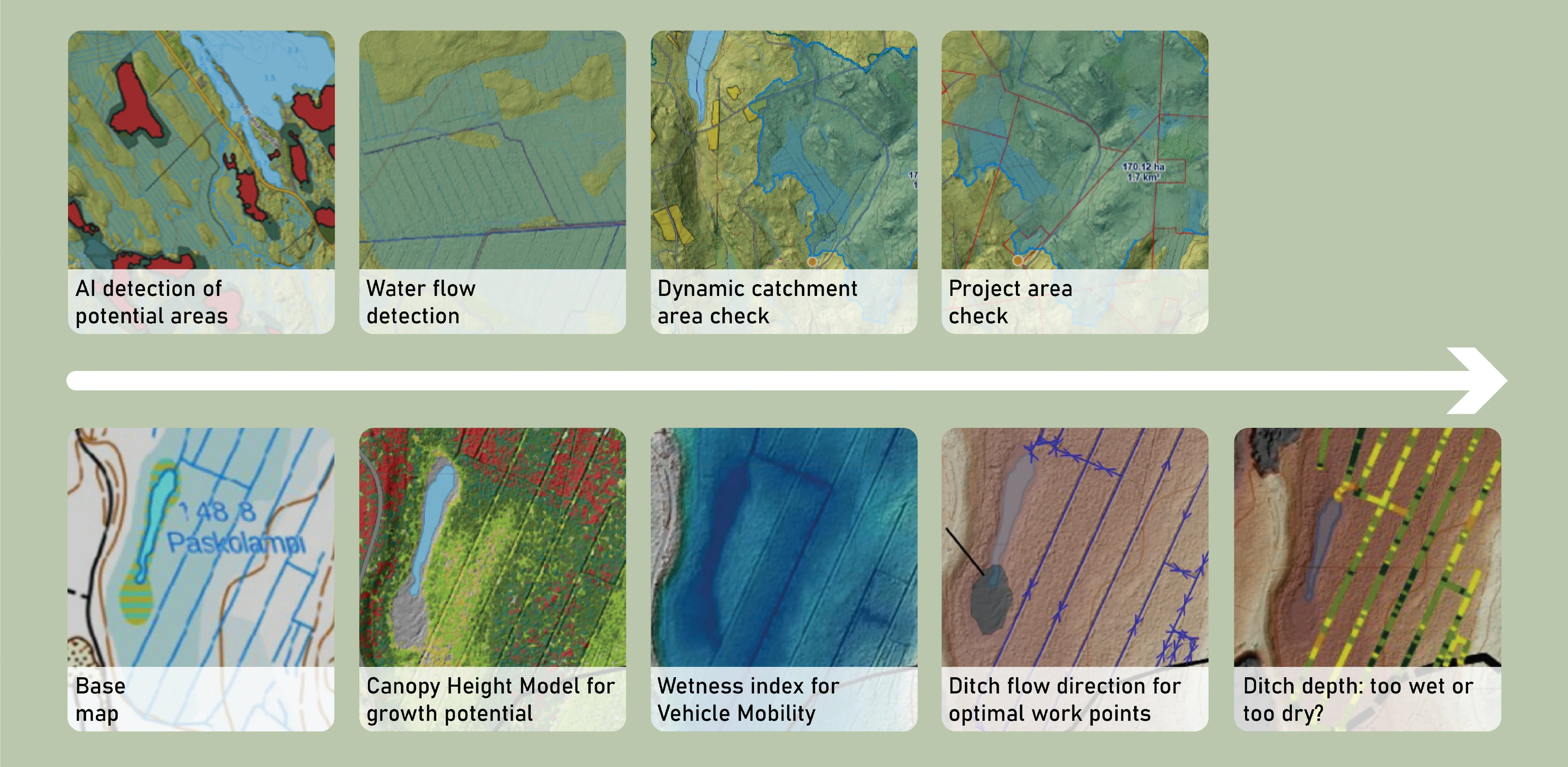
The questions commonly include:
- Is the site eligible for restoration funding? (depending on the funding program)
- Do higher water levels cause harm to neighboring landowners?
- What measures are required and what will they cost?
- What is the total catchment area influencing the site?
- How large is the effective restoration area?
- Does the project contribute to have synergic effects for nature protection areas, endangered species or natural parks?
- Where will restoration actions have the greatest impact?
Reliable answers require accurate geospatial analysis related to forests and catchment areas.
Geospatial Tools for Restoration Planning
Traditionally, restoration planning has relied heavily on field surveys and local observations. While these remain important, large restoration programs increasingly require landscape-scale understanding.
Modern geospatial analysis allows planners to evaluate large areas before entering the field, which supports applying for a restoration project funding.
Let’s take a ValuntaKo project as a real-life example. Arbonaut and its partners are developing models that help digitally map catchment areas, drainage networks, water movement, and restoration opportunities in the northern region of the Höytiäinen Lake.
The model helps pinpoint optimal locations for water protection structures and directs efforts to the sites where they will make the most impact. Artificial intelligence (AI) and terrain-based modelling can further improve planning by helping identify potential restoration sites before field visits take place.
"By restoring a peatland downstream in the catchment area, the restoration actions may cover a much larger area. In our project at Heinäsuo, North Karelia, the restoration of 15 hectares of peatland filter the water coming from up to 300 hectares of peatland upstream." — Vesa Leppänen, CTO of Arbonaut
The ValuntaKo receives funding from the EU, Arbonaut, Watec Consulting, the University of Oulu, Metsä Group, MVTT, and the Economic Development Centre.
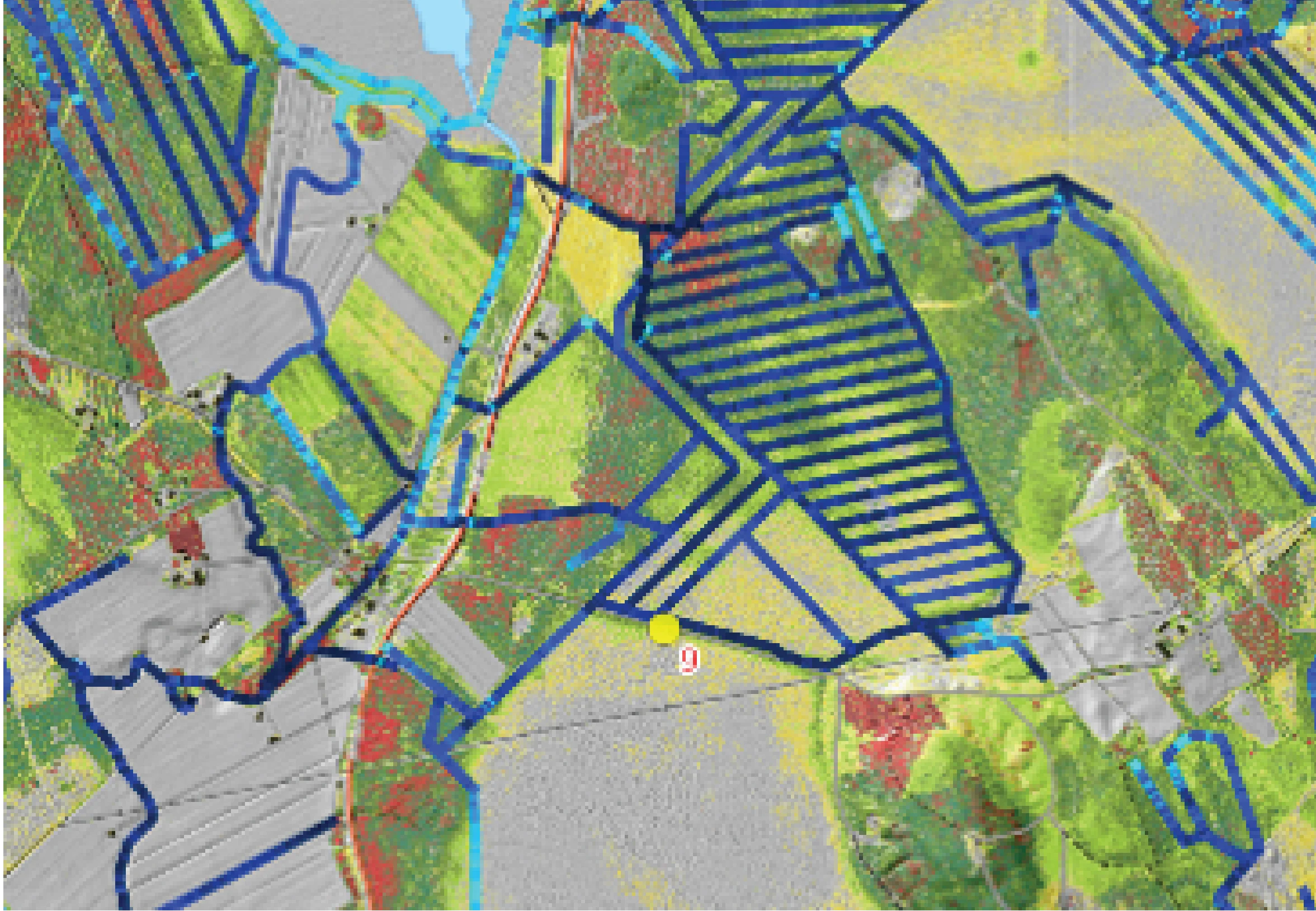
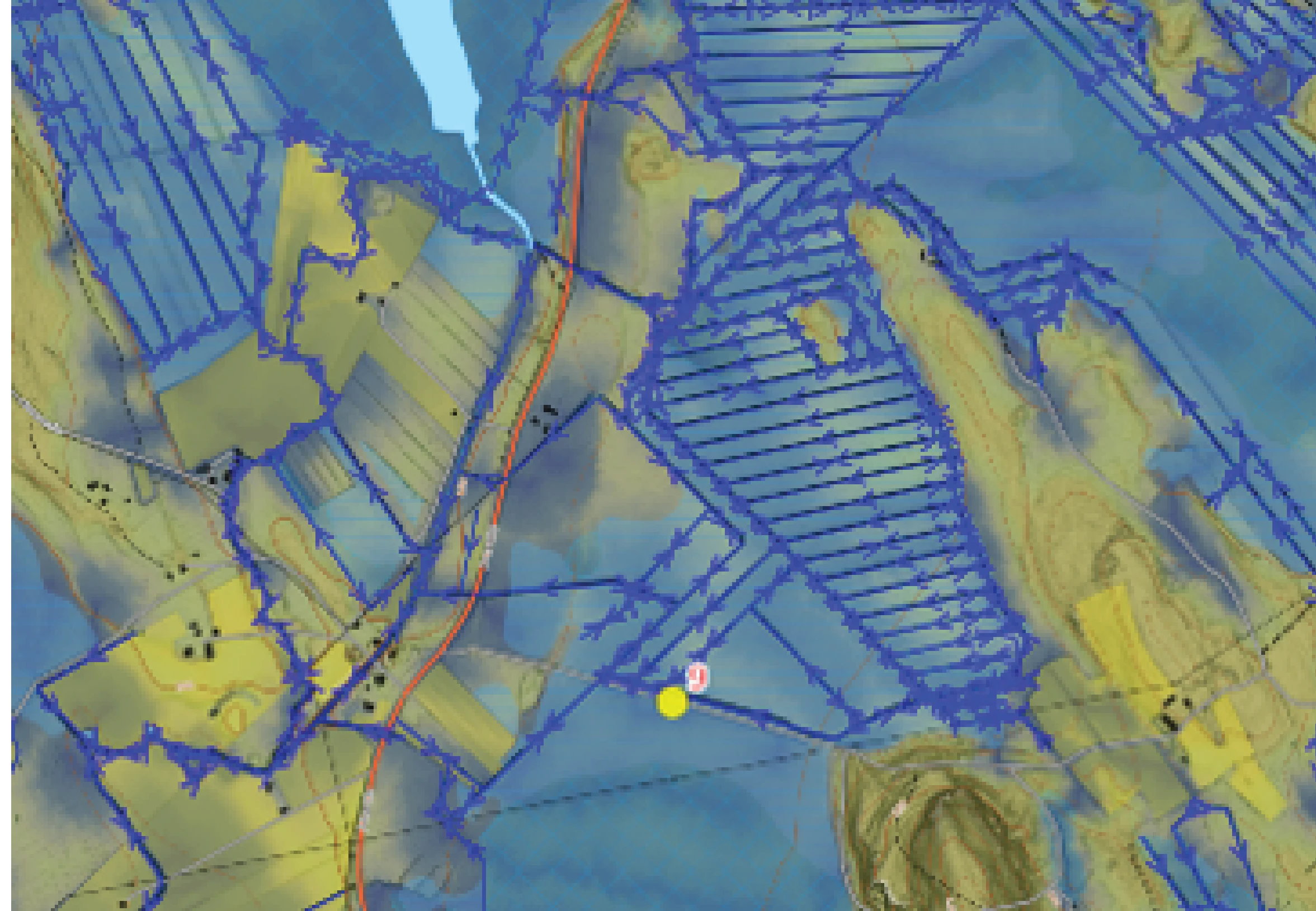
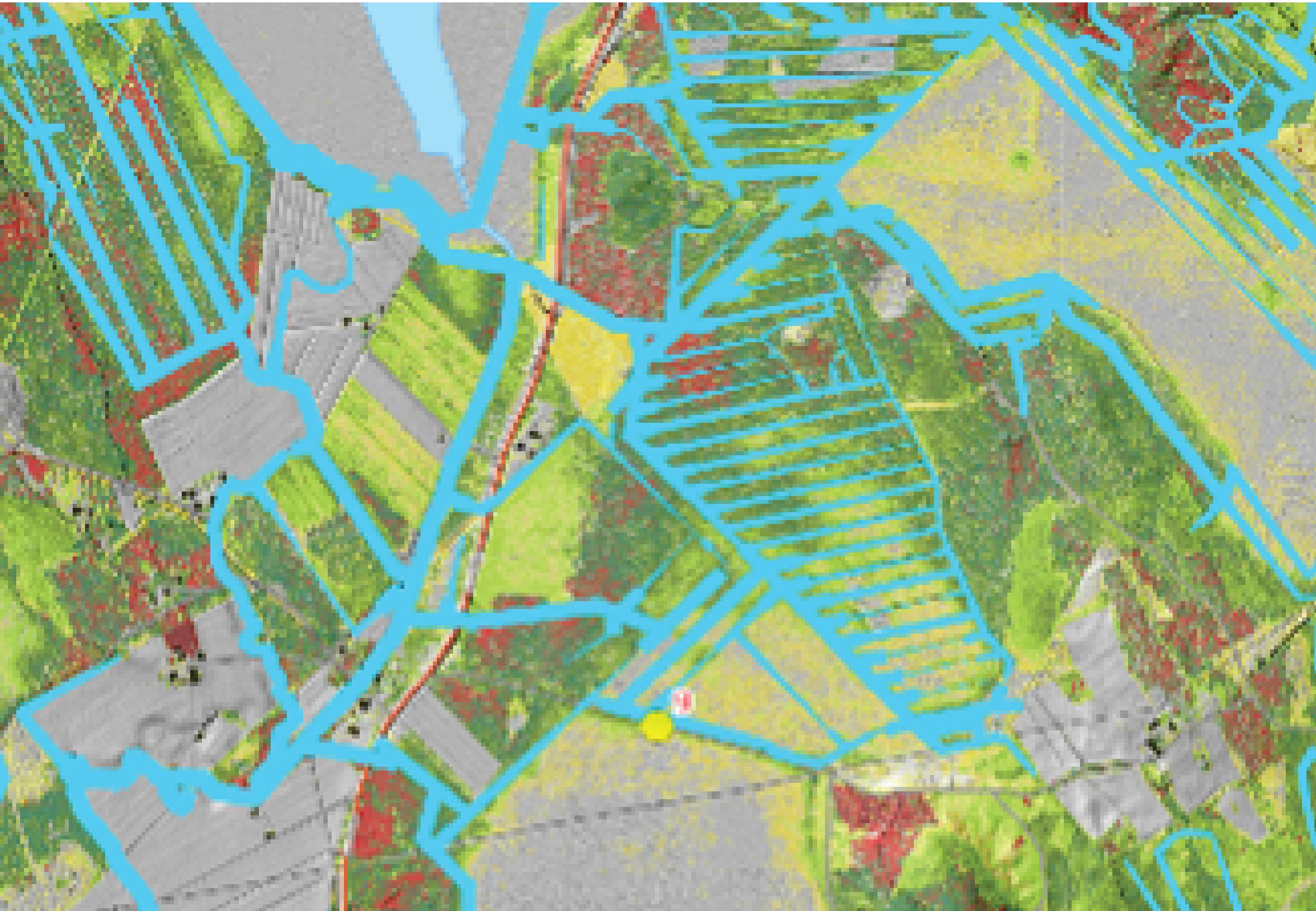
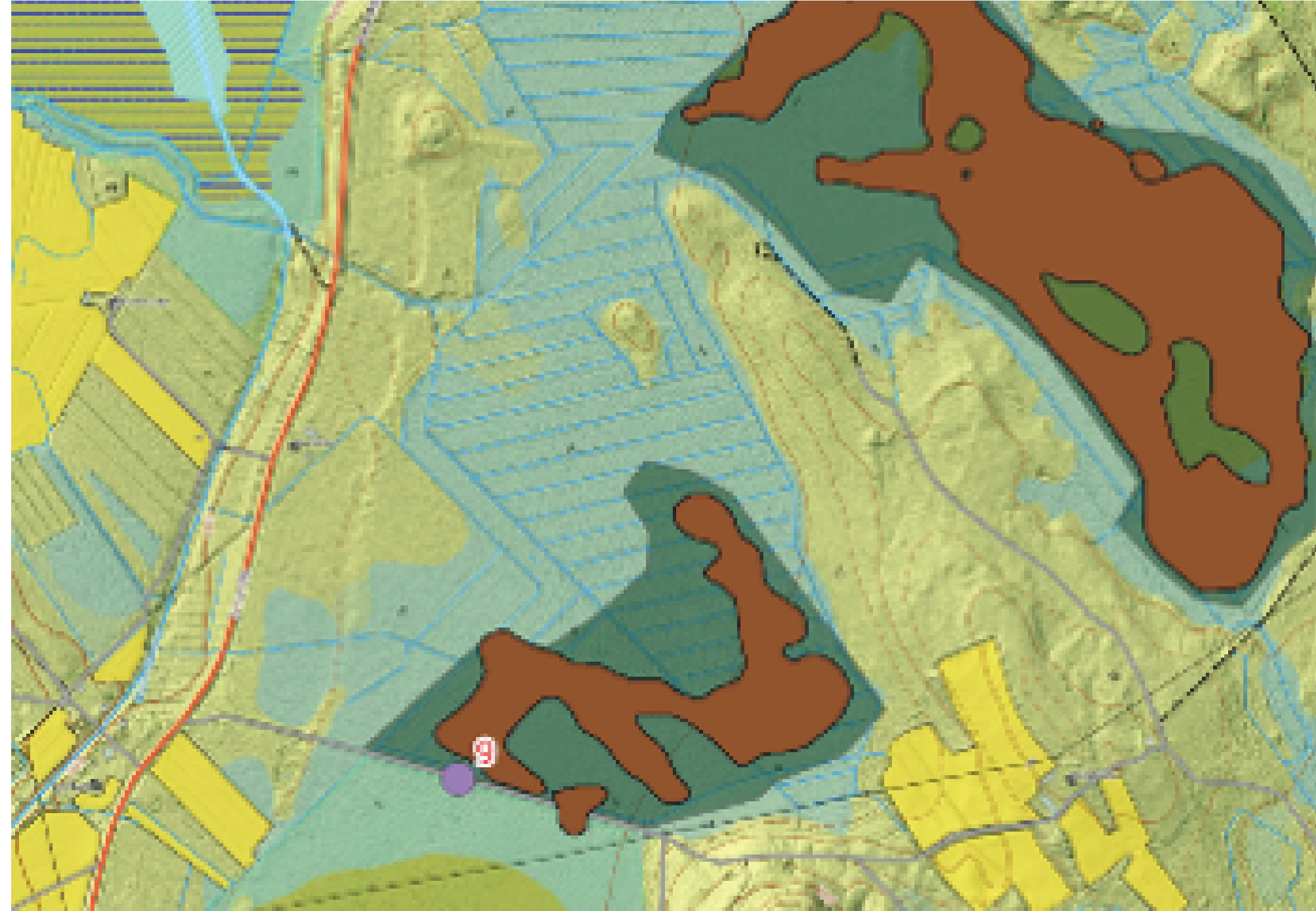
As restoration funding increasingly requires evidence-based planning, access to reliable geospatial data is becoming a critical part of project development and implementation.
Finding the Balance
Restoration is not a one-size-fits-all solution.
The most effective projects are those carried out in the right places, guided by a sound understanding of hydrology, realistic economic expectations, and clearly defined ecological objectives. Ultimately, the question is not whether restoration should happen, but where can it deliver the greatest overall benefit.

 Cookie Policy